Exploring how mental readiness shapes the way people train
As Wahoo invested more deeply in the fitness side of the app, there was an opportunity to expand the product’s view of performance. Physical output was already measurable through things like pace, heart rate, and training load. What was missing was a way to help users understand how mentally prepared they were before a workout.
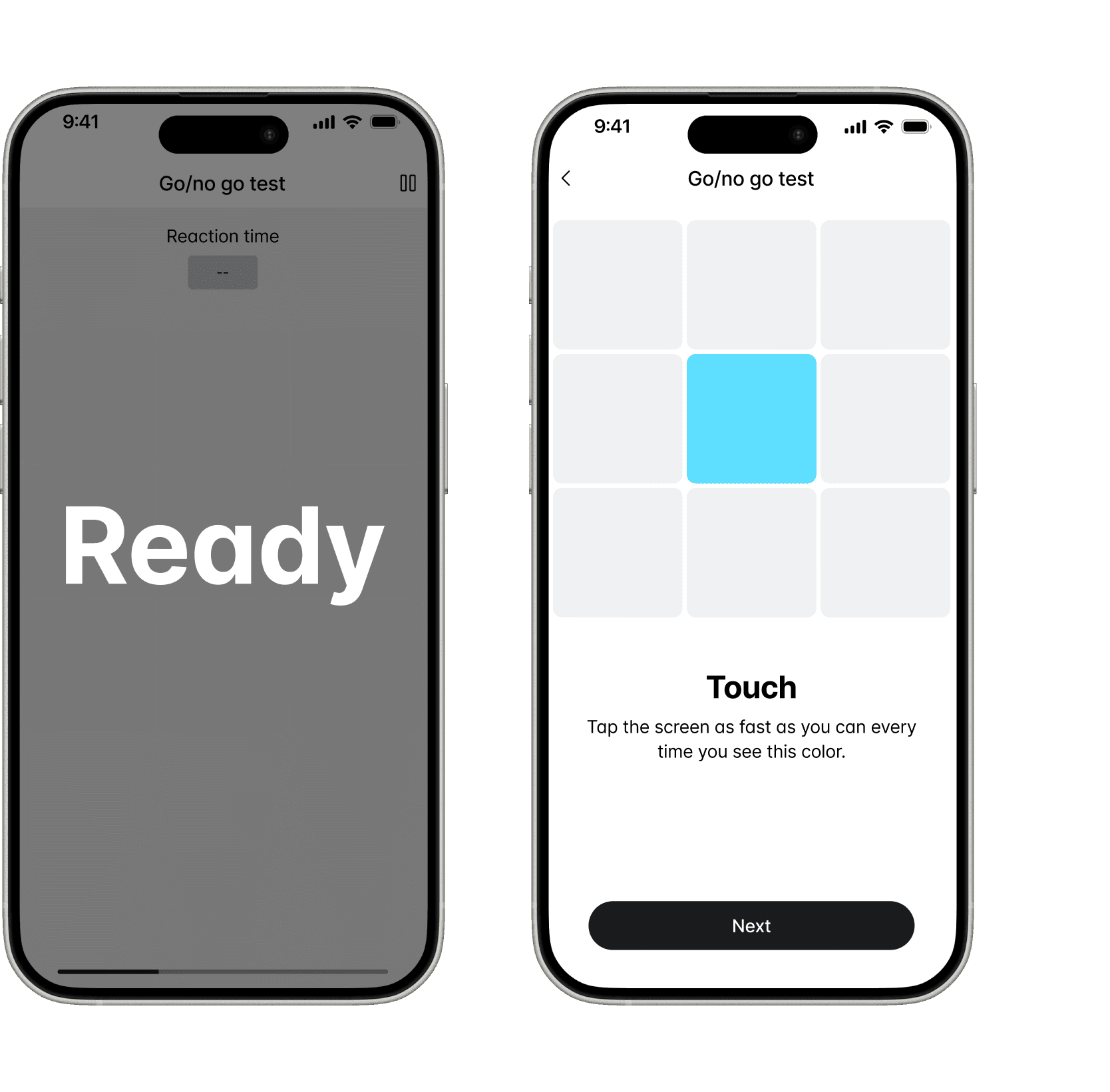
I led the design of Fitness Mental Assessment, a concept built to explore how mental readiness could become part of the product experience. The goal was to create something simple, measurable, and approachable — a lightweight interaction that could help users reflect on their state before training and better understand how mindset might influence performance.
The challenge: introducing a new kind of signal into a product ecosystem that had historically focused on physical performance.
Bringing mental readiness into the product story
As Wahoo expanded its investment in the app experience, and through the acquisition of a mental-data company, there was a clear signal that the product could evolve beyond physical tracking alone. This project explored what that shift could look like in practice. The goal was to design an interaction that felt light enough to try, but meaningful enough to suggest that mental state could be part of workout preparation.
The opportunity: reposition the app as more than a fitness assistant, and closer to a more complete performance companion.
What research made clear
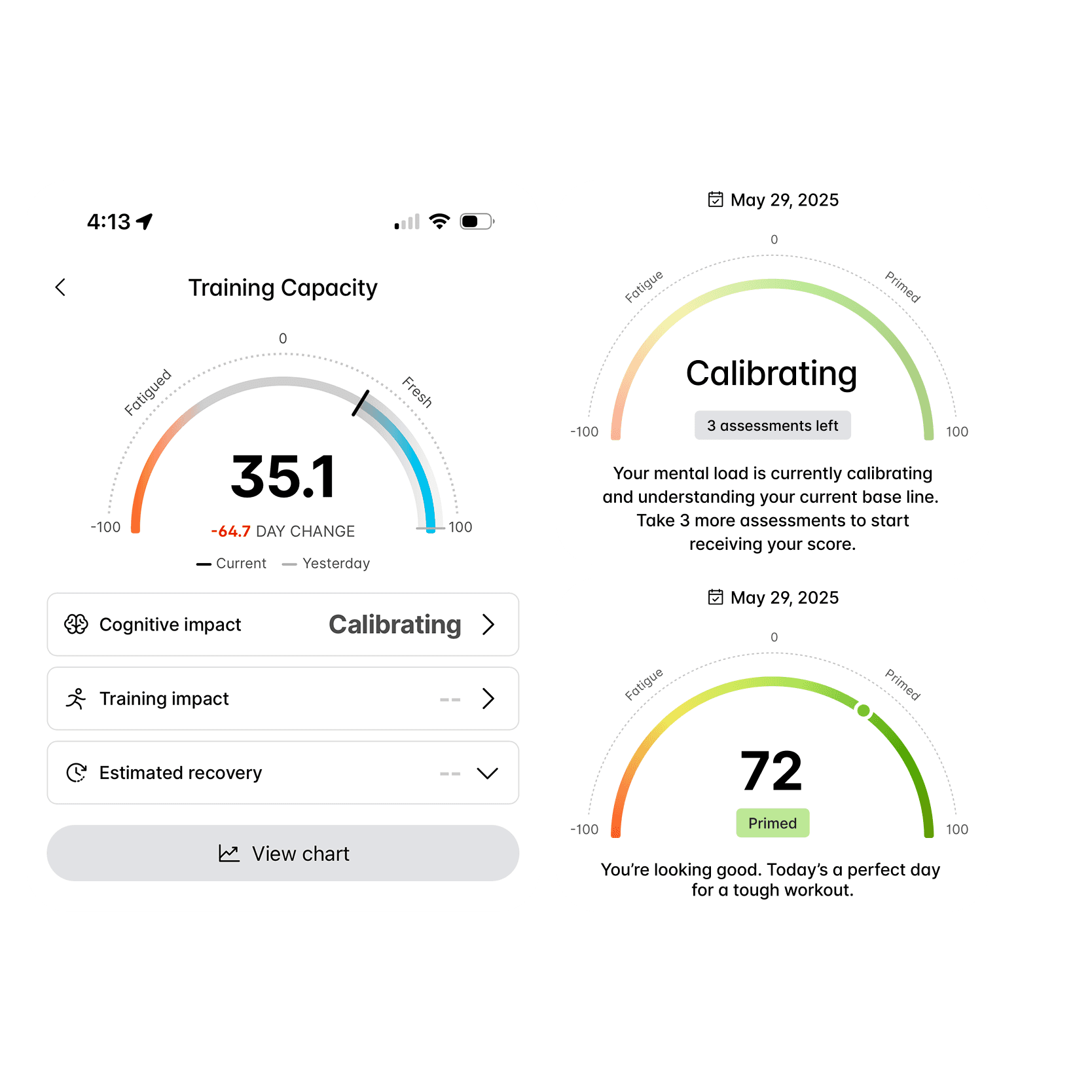
Despite how you perform at the end of the day only you know how you feel. So no matter how simple of an experience I wanted to create, we had to always account for direct user feeling inputs.
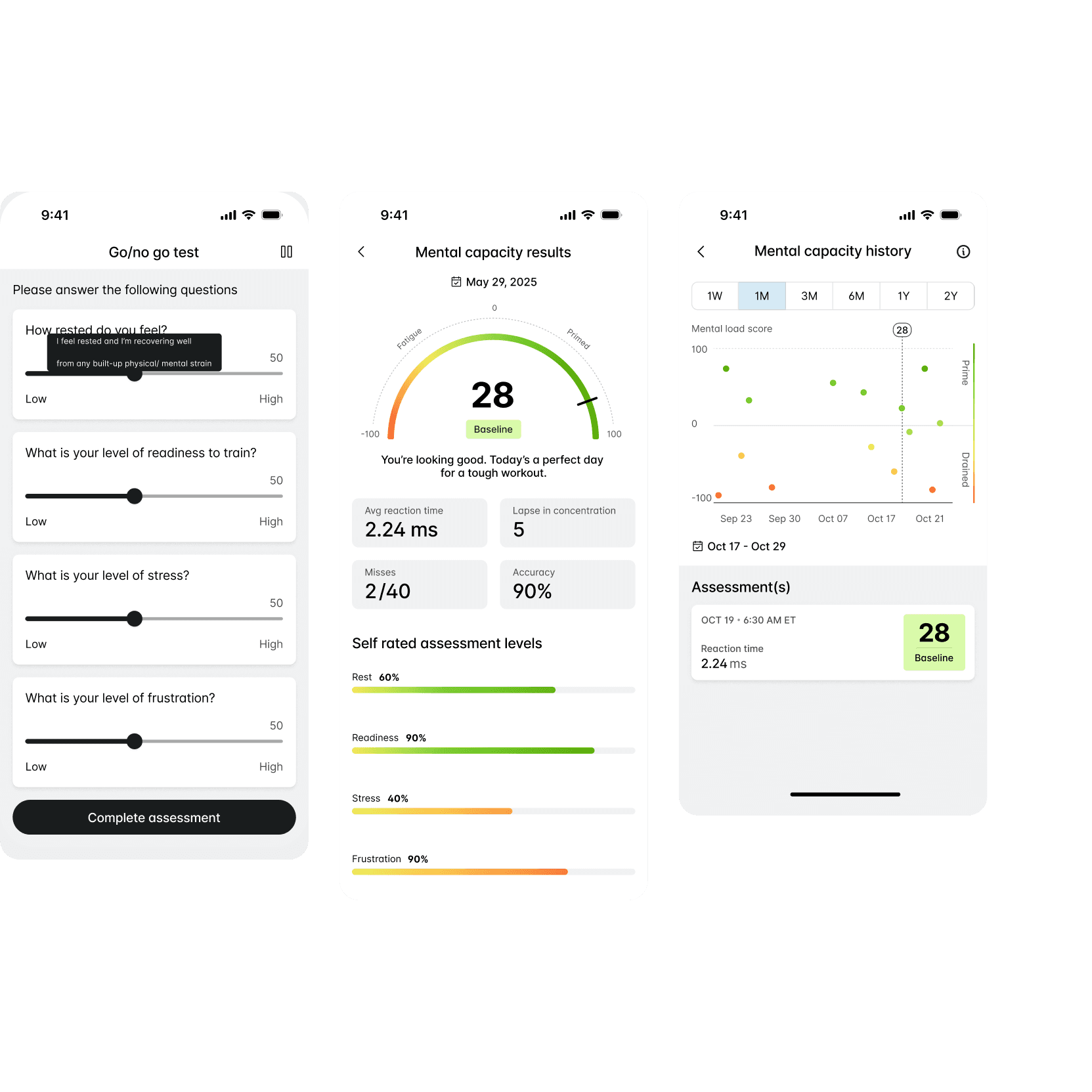
How the experience took shape
1. A measurable game concept
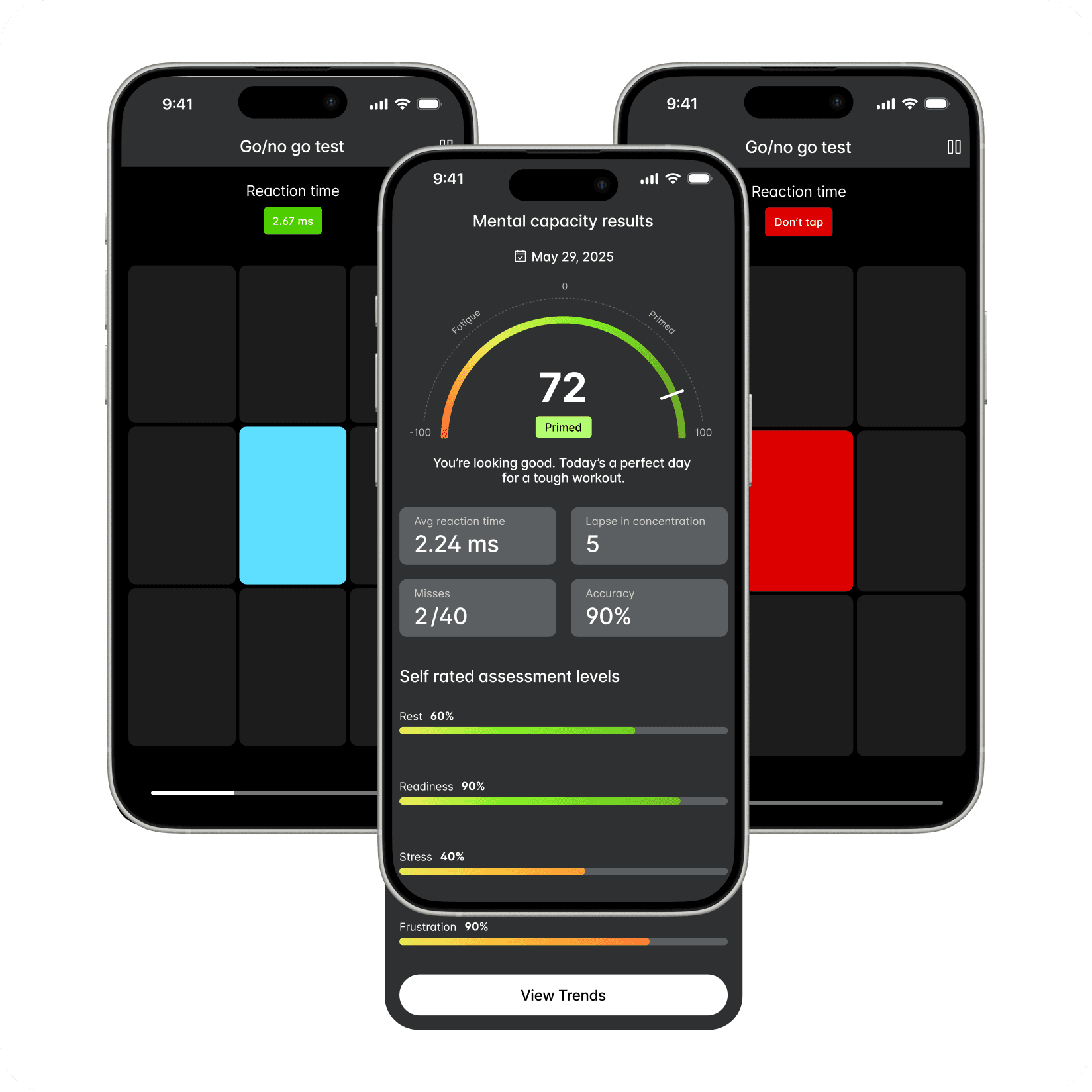
Instead of framing the experience like a form or survey, I created a game-based concept that could function as a lightweight assessment. This made the interaction feel more engaging while still producing a result users could interpret as part of their workout preparation.
2. A simpler interface
The interface was intentionally pared back to reduce unnecessary interaction complexity. The design needed to feel easy to understand at a glance and quick to complete in the moment before a workout.
3. Reduced precision demands
Because early prototypes exposed issues with touch target size, I shifted the experience toward a model that asked less from users physically and cognitively. This helped the concept feel more approachable and more reliable.
4. A softer emotional tone
One refinement in the final experience involved the way the product handled misses. Early versions of notifications felt too abrupt, which clashed with the reflective nature of the feature. I dialed those moments back so the experience felt more supportive and less punitive.





Let's connect
I'm a lover of people, just saying Hi would do more than you think.
As a product designer, I'm on an exciting journey to blend creativity with technology to craft memorable user experiences.